
January 8, 2026 · Colaberry School
Can a non-technical person learn data analytics?
Non-technical individuals can learn data analytics with the right guidance and tools, focusing on business insights rather than complex coding.
Yes. A non-technical person can learn data analytics and build a career in it with the right structure and guidance. Most data analytics roles focus on understanding data and making business decisions not writing complex code.
Prefer watching over reading?
Watch our podcast below:
listen to our podcast below:
In reality, data analytics today is designed to be accessible, especially for people who already understand how businesses work.
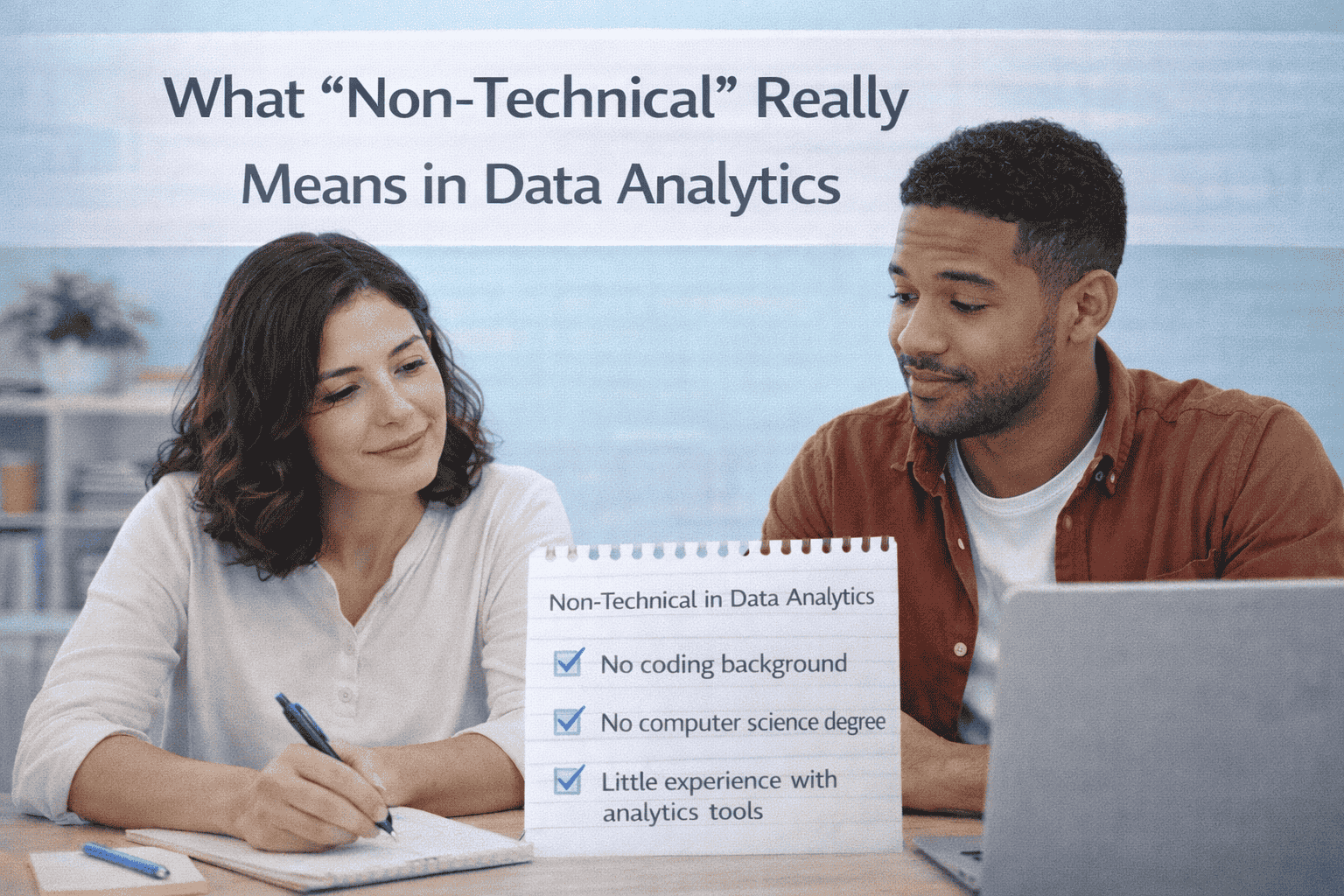
Being non-technical usually means:
-
No coding background
-
No computer science degree
-
Little experience with analytics tools
That does not disqualify someone from learning data analytics.
Most beginners start with familiar concepts, enhanced by modern tools:
-
Spreadsheets — supported by smart automation
Meaning: You focus on understanding numbers instead of doing manual calculations. -
Dashboards — powered by AI-enhanced analytics
Meaning: Important trends and changes stand out automatically. -
Reports — guided by predictive insights
Meaning: You can understand what may happen next, not just what already happened.
Step 1: Learn how data supports decisions
Before tools, beginners learn:
-
What data represents
-
How businesses use data to make decisions
-
How insights turn into actions
This foundation matters more than technical skills at the start.
Step 2: Start with beginner-friendly tools
Non-technical learners usually begin with:
-
Excel or spreadsheets for basic analysis
-
SQL for structured queries (simple and readable, not heavy coding)
-
Power BI or similar tools for visualization
These tools are built for business users, not developers.
Step 3: Use AI as assistance, not complexity
Modern analytics tools include AI-powered features designed to help beginners.
For example:
-
AI-powered analytics
Meaning: The system highlights patterns instead of you searching manually. -
Automated insights
Meaning: Unusual trends or changes are flagged for you. -
Predictive analytics
Meaning: Past data helps estimate future outcomes.
You are not building AI—you are using tools that already include it.
Step 4: Practice on real-world scenarios
Non-technical learners progress faster when they:
-
Work with real datasets
-
Solve practical business problems
-
Explain insights in simple language
Strong communication and business understanding often become advantages here.
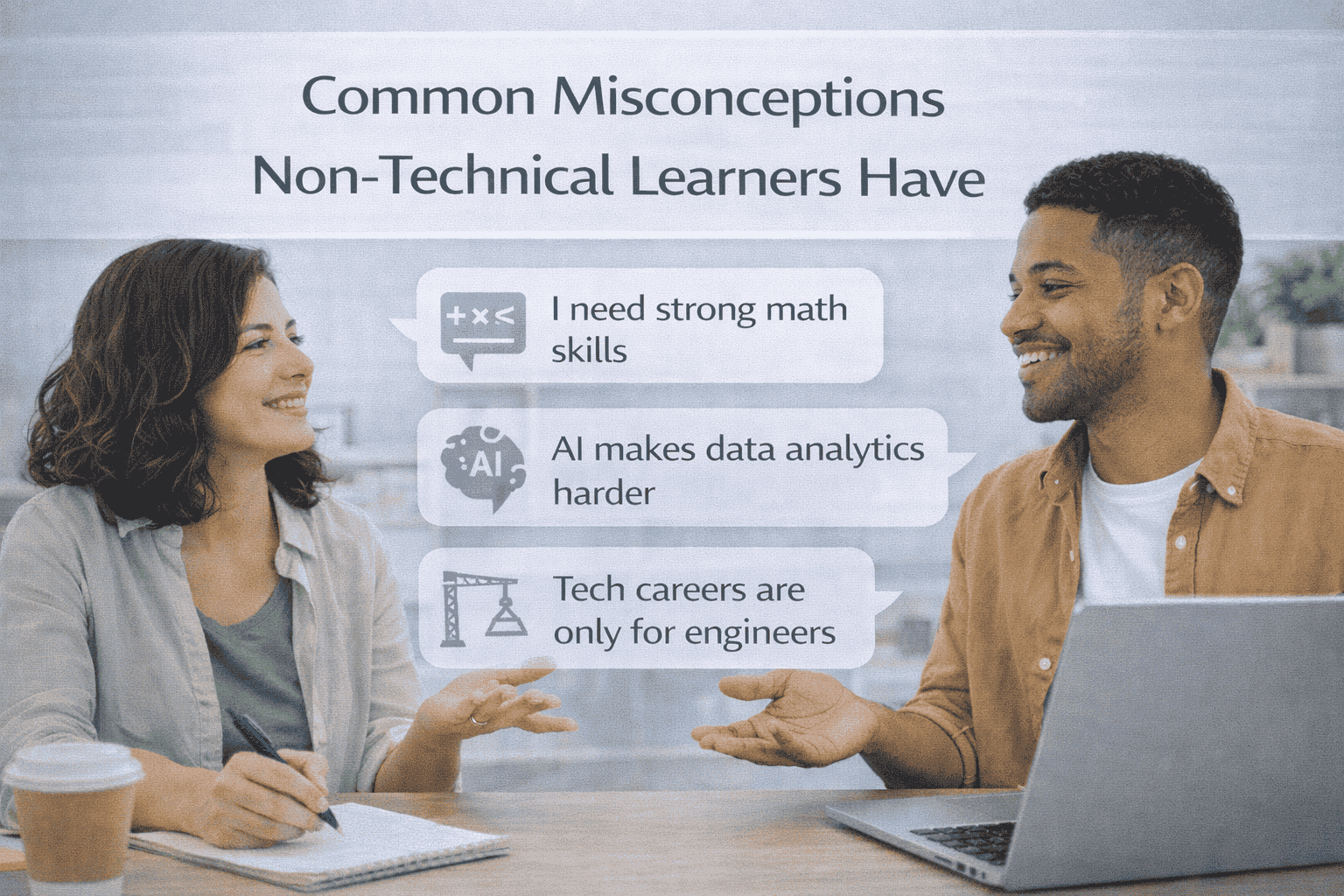
Common misconceptions non-technical learners have
-
“I need strong math skills”
Most analytics uses basic math, not advanced formulas. -
“AI makes data analytics harder”
AI-powered analytics actually reduces manual effort. -
“Tech careers are only for engineers”
Many data analysts come from non-technical backgrounds. -
“I need years to become job-ready”
With structured learning, progress is steady and realistic.
FAQs
Do I need a computer science degree to learn data analytics?
No. Skills, problem-solving ability, and projects matter more than degrees.
Is SQL difficult for beginners with no coding experience?
No. SQL is structured and closer to plain language than programming.
Can I learn data analytics while working full-time?
Yes. Many learners study part-time with a clear schedule.
How long does it take for a non-technical person to learn data analytics?
With consistency, most beginners become comfortable with core concepts within a few months.
Does AI replace data analysts?
No. Analysts use AI-assisted analytics to work faster and make better decisions.
Where Colaberry fits into this journey
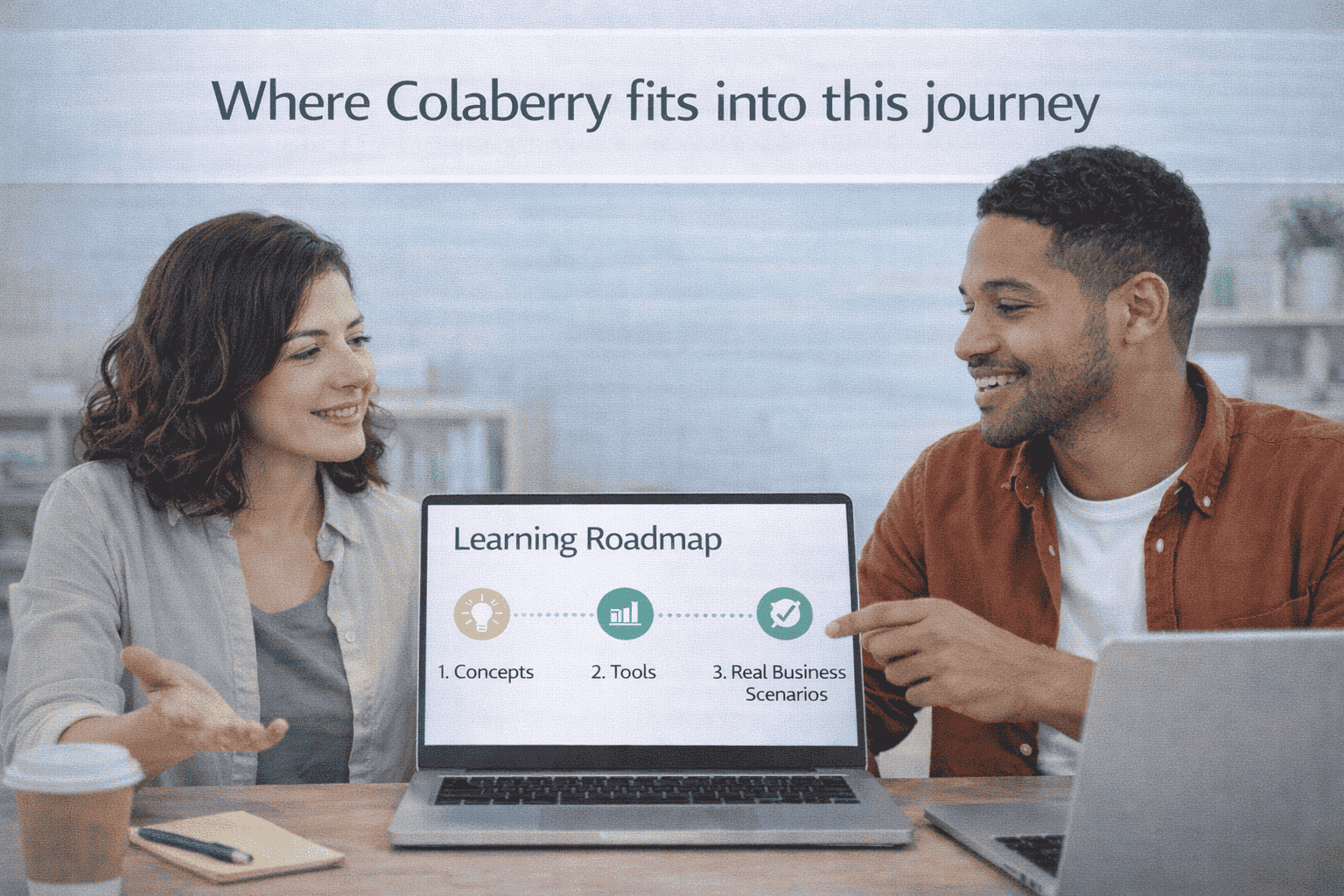
For non-technical learners, the main challenge is not ability—it’s clarity and structure.
Learning works best when:
-
Concepts are explained simply
-
Tools are introduced step by step
-
Analytics is taught using AI-enhanced dashboards and real business scenarios
-
Mentorship helps remove confusion early
Programs built for career switchers and non-technical backgrounds make this transition smoother and more achievable.