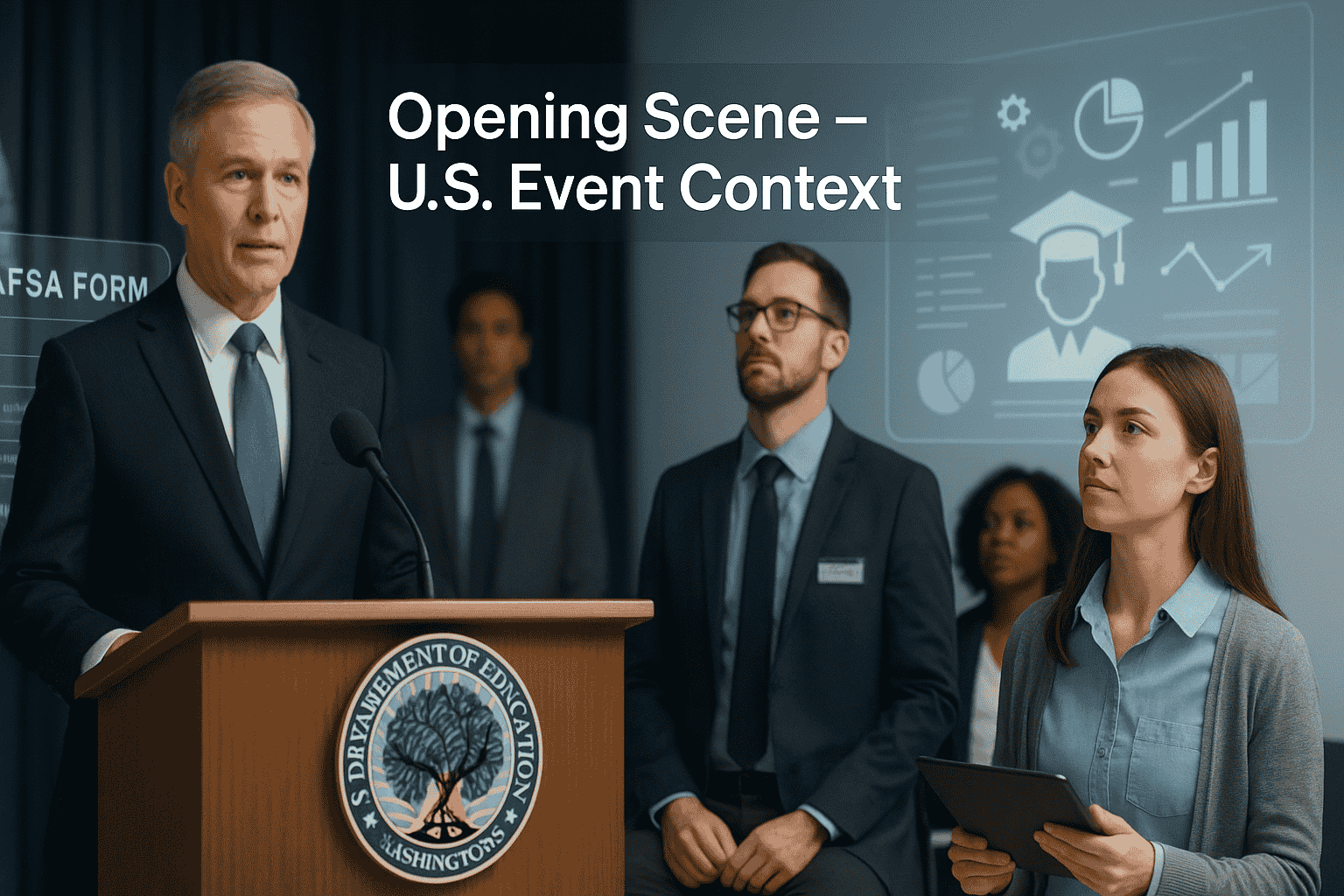
In recent months, national headlines have underscored the urgent need to modernize education workflows. For example, in late September 2025 the U.S. Department of Education announced the earliest-ever launch of the FAFSA (student aid) form, aiming to undo years of rollout delays and relieve strain on colleges and students. At the same time, federal leaders have doubled down on AI training in education and workforce programs, signaling that automation is a top priority. These developments make clear why a fast, intelligent admissions system is mission-critical: long wait times or manual backlogs no longer meet today’s expectations. Colaberry’s “Cory AI Agent” project steps into this setting. As colleges nationwide scramble to respond quickly to thousands of inquiries – from financial aid questions to program details – our interns are building exactly the kind of AI-powered solution that solves that problem at its root.
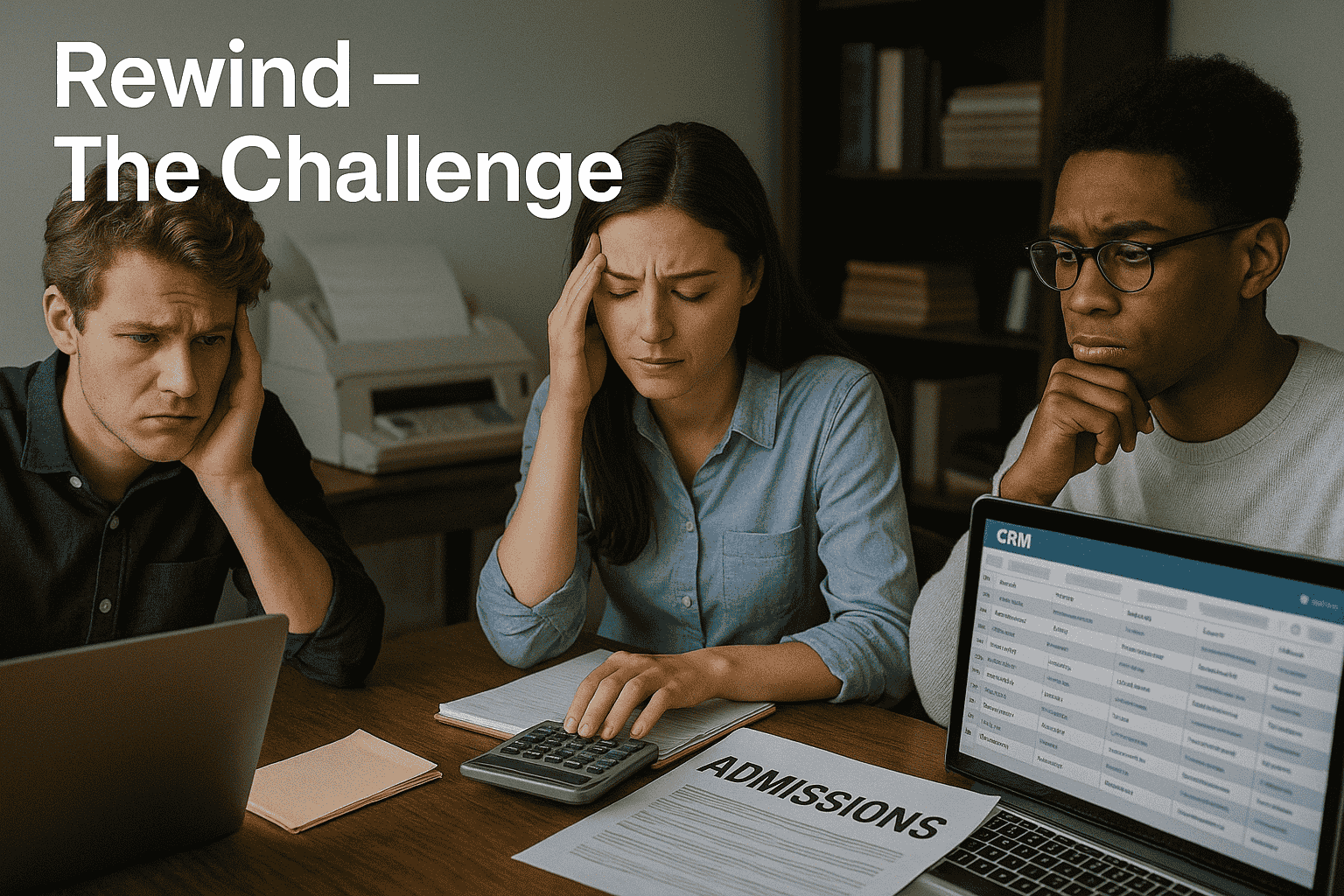
Just months ago, Colaberry’s own admissions process was painfully manual. When a prospective student submitted an inquiry, our admissions staff often took a full day or more to respond, juggling email threads and CRM spreadsheets. Leads would sit idle and student interest could wane. Interns saw this bottleneck and pitched a bold solution: automate the first-wave outreach so no lead waits in limbo. This wasn’t a minor tweak but a strategic pivot. Colaberry’s leadership had set a vision of transforming into a full-fledged AI agent services company – and our admissions pipeline was the proving ground. The mission became: build an AI assistant that could talk to leads immediately and keep the conversation moving. By rewiring the entire lead response process, we aimed to leapfrog from slow, manual replies to instant, personalized engagement. In short, we turned our own pain point into an R&D project with game-changing potential.
The Journey – Tools & Transformation
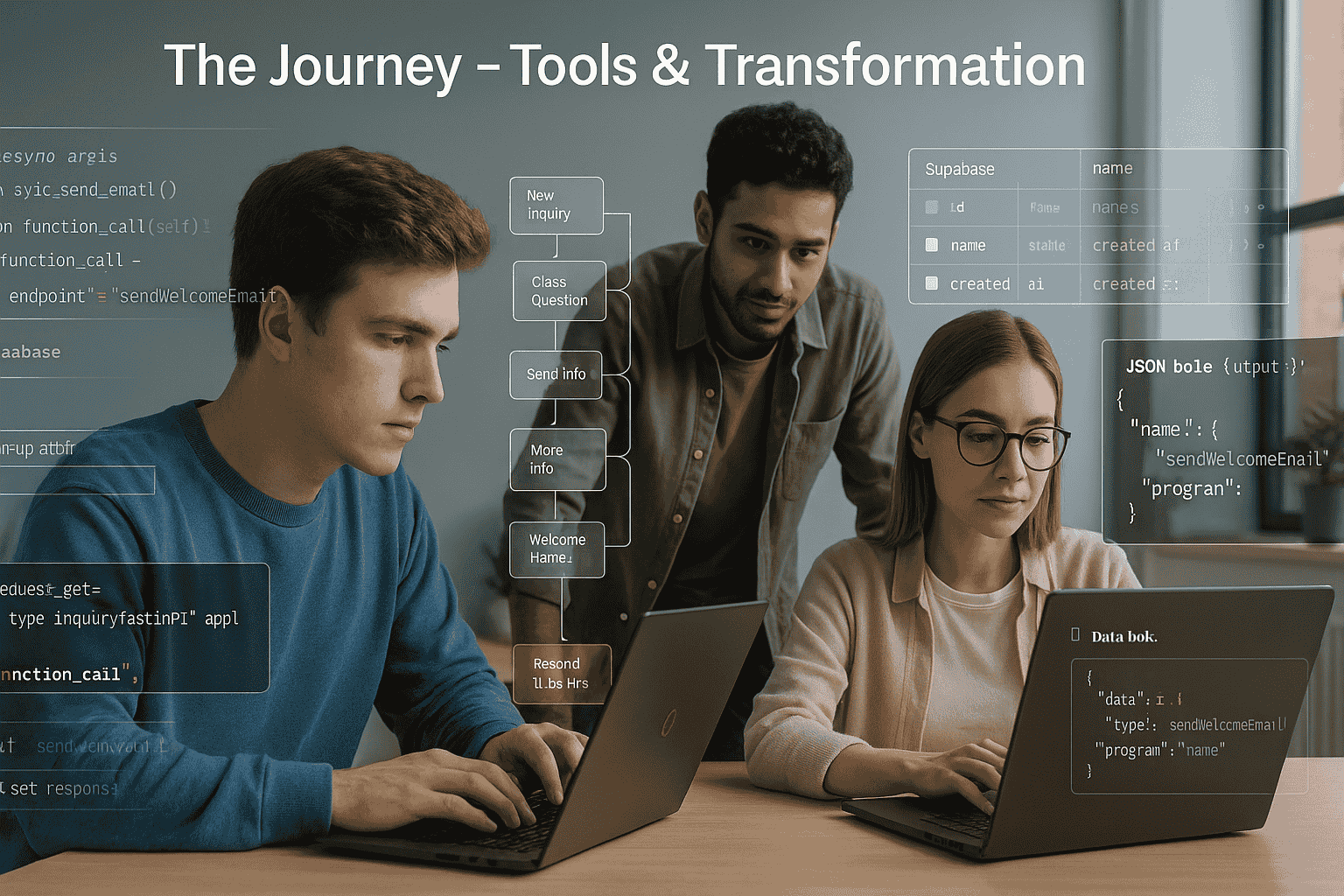
To solve this challenge, the intern team assembled a modern AI stack and agile processes. At the foundation we built a Python FastAPI backend and used Supabase (a Postgres database with realtime features) to track each lead’s state and conversation history. When a new inquiry arrived (via email or text), our FastAPI service sent the message into GPT-4.1 for analysis. The model generated a structured interpretation of the user’s intent. Thanks to OpenAI’s function-calling capability, GPT-4.1 could return not just text but a JSON payload telling us exactly what to do next – for example, calling a sendWelcomeEmail(name, program) function or queuing a follow-up SMS. In practice, this meant the LLM bridged language and action seamlessly: if a student asked “When does the next data analytics class start?”, the model tagged this intent and triggered our “sendInfo” API call with the relevant schedule. We defined many such actions (send email, update CRM, log a reminder), so that our AI could operate like a developer writing code, but in plain conversation.
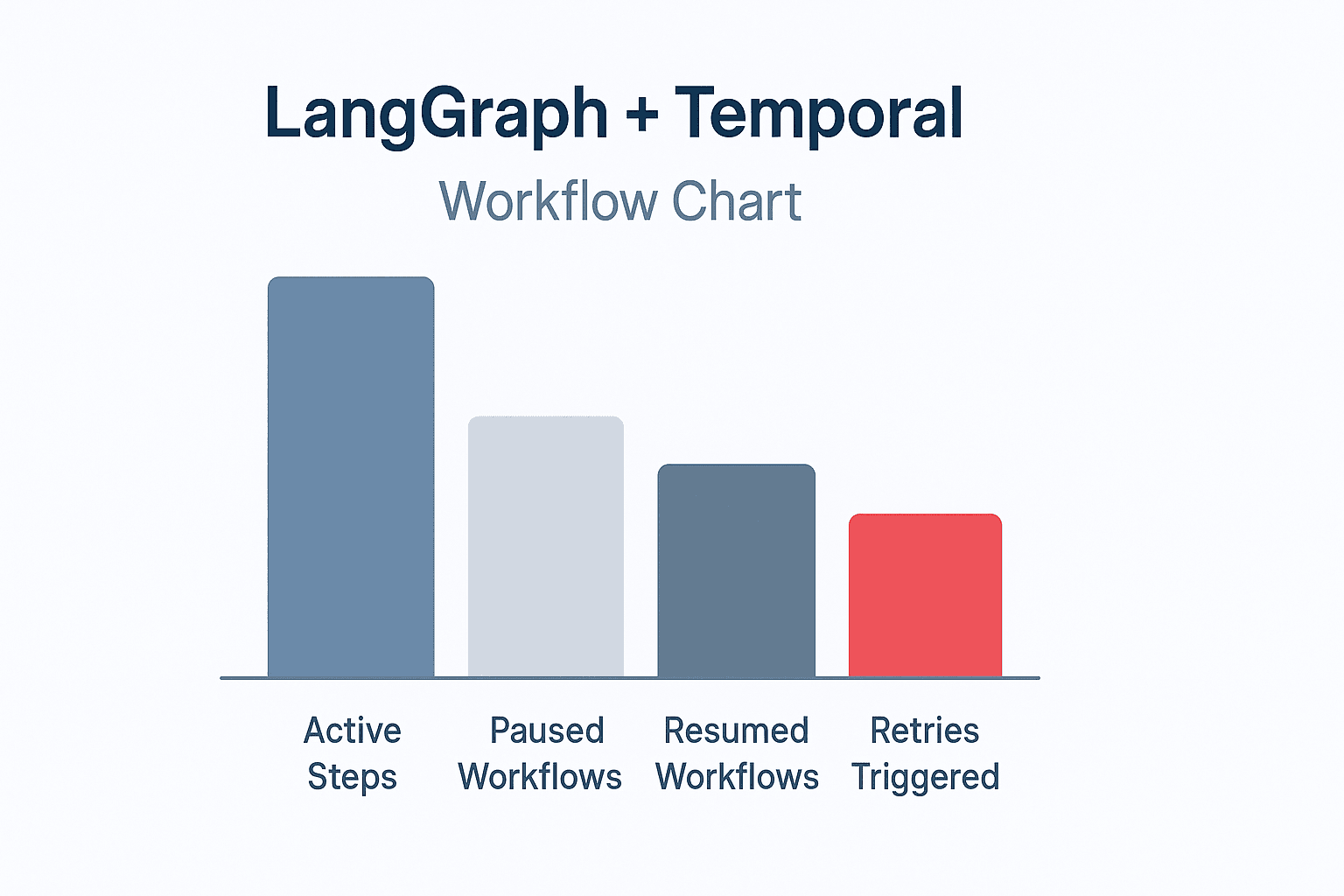
- LangGraph + Temporal: One key challenge was keeping track of back-and-forth dialogues. We adopted LangGraph to model conversations as directed graphs of states and transitions. Each node in the graph represented a step (like “ask about financial aid” or “confirm contact info”), and edges handled branching (yes/no, or topic changes). LangGraph let us build cyclical flows where the bot could loop or jump based on answers. Under the hood, we ran these flows on Temporal, a durable workflow engine. Temporal ensured every step of the conversation was saved – even if our server restarted or if days went by before a student replied. In effect, each interaction became a “workflow” that could be paused, retried, and resumed automatically. For example, after an initial response we might await a user reply; if none came in 48 hours, Temporal would wake the workflow to send a reminder. This combination gave us robust, stateful AI dialogs far beyond one-shot responses.
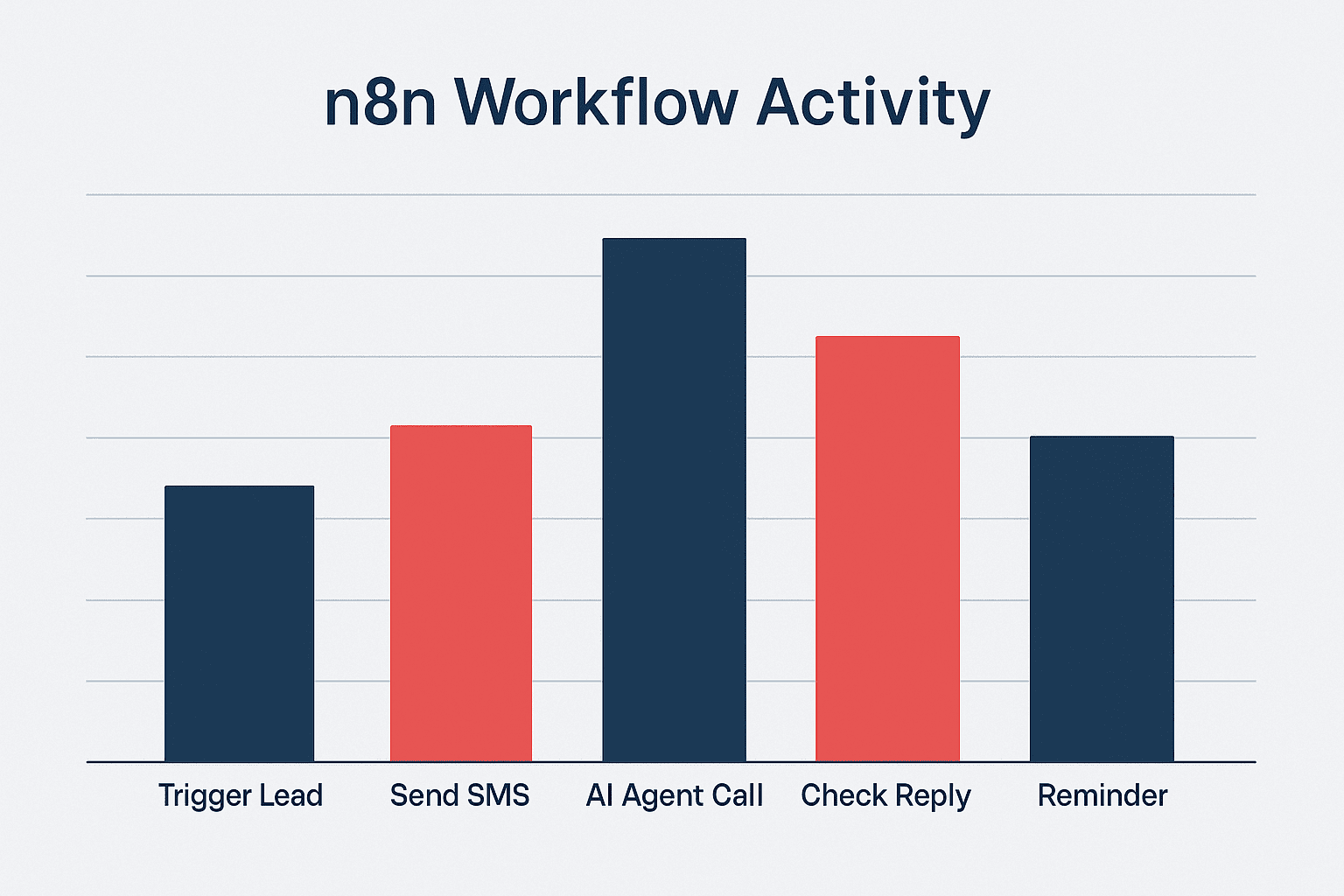
- n8n Workflow Builder: To connect all the pieces, we used n8n – an open-source, no-code automation platform. With its drag-and-drop editor, we visually stitched together our CRM, email/SMS providers, and the GPT-4.1 service. In n8n we built multi-step “campaign” pipelines: when a lead is created, n8n triggers a sequence (send a welcome SMS, call the AI agent, etc.), and later nodes check if replies have come in or if follow-ups are needed. This no-code layer proved invaluable: marketing or operations team members could update email templates and campaign schedules on the fly without touching code. It also gave us a clear audit trail and debug interface. In short, n8n let us iterate experiments quickly – for example, adding a new “send text reminder at day 3” step was as easy as dragging a node and setting a timer.
Our intern team also adopted agile habits to stay nimble. We held daily stand-ups and used two-week sprints to manage tasks. Crucially, we ran weekly
“Show, Tell, Reflect” sessions: each intern demonstrated their week’s work (“Show”), explained their approach or challenges (“Tell”), and discussed what to improve next (“Reflect”). This ritual kept everyone in sync and accelerated learning from mistakes. We even built a custom
GPT-based AI coach to mentor ourselves: fine-tuning an LLM on our documentation and best practices, so that team members could ask it questions (for example, “How do I write a LangGraph node for timeout?”) and get instant tips. This AI coach felt like an around-the-clock expert guiding us through new tools. Together with pair programming, code reviews, and continuous feedback, these practices turned a group of novice interns into a productive team in record time.
The Broader Picture – What It Means
The Cory project isn’t just a one-off hack; it’s a microcosm of big shifts in education and industry. Across the country, schools and companies are chasing AI readiness. States are investing WIOA and educational grants into AI literacy for students and workers, and districts are experimenting with chatbots for everything from enrollment advising to career counseling. Our interns applied this trend hands-on: by leveraging open-source and low-code tools, we democratized automation the way many campuses are trying to. The use of platforms like n8n mirrors how IT teams now build campus apps with drag-drop builders instead of heavy coding. Similarly, our focus on workflow durability and messaging reflects an automation boom in education – think virtual tutors and AI dashboards becoming commonplace. Meanwhile, workforce-training programs emphasize exactly the skills our interns practiced: understanding LLMs, orchestrating AI “agents,” and integrating APIs. In fact, this project echoes federal priorities (for example, recent executive orders on AI education) by proving that applied AI literacy has immediate outcomes. In essence, Colaberry’s shift toward AI-agent services is riding the same wave that’s reshaping universities and companies: a move from manual processes to smart, automated systems that amplify human work.
Conclusion – Returning to the Outcome

The results speak for themselves. With Cory live in our pipeline, new leads get a meaningful response in under 30 seconds, not days. Our contact rate soared to about 95% since no inquiry slips away, and we cut labor costs dramatically – roughly 80–95% savings in what staff would otherwise have spent manually emailing or calling each lead. These aren’t theoretical gains but concrete business metrics now core to Colaberry’s model. In fact, Cory has been integrated into our CRM and packaged as a service for clients; it has become the foundation of Colaberry’s modern admissions solution. We didn’t just improve one process, we rewired it: an automated conversation engine now runs alongside human advisors, letting our people focus on high-value guidance while the bot handles routine follow-ups. In short, this project turned Colaberry’s admissions vision into reality and set a new industry standard. Fast, AI-driven response times are now part of our brand promise – and they can be part of any institution’s playbook moving forward.
Intern Reflection: Jordan T
Working on the Cory project was eye-opening. As an intern, I’d never built something that actively “talks” to real students, but this taught me how powerful our tools can be. Each week I dove into new tech – from defining GPT-4.1 prompts to linking nodes in n8n – and saw immediate results. I learned to structure conversation flows with LangGraph, and how Temporal automatically resumes a halted workflow. The biggest thrill was seeing the bot reply almost instantly to a test inquiry we sent – knowing I helped make that happen was hugely rewarding. At first I worried I wasn’t qualified, but the team’s support (and even a little AI “coach” we built) made it possible to learn on the fly. By the end, I found myself troubleshooting real code issues and iterating quickly on the model prompts. This experience gave me confidence that I can tackle big projects: I saw how data science and engineering solve meaningful problems, and how an intern like me can really impact the student experience through technology. It was challenging and exciting to contribute directly to speeding up students’ journey to their education goals.
Ready to get started?
Professionals: Explore Colaberry’s training programs in Data Analytics and AI and apply for the next cohort or a free open house. Your new career path might be one click away.
Businesses: Schedule your
Free AI Roadmap Assessment with Colaberry’s consulting team. Discover how a tailored AI strategy can cut costs, boost insights, and future-proof your organization, all while uplifting your team.
The age of AI doesn’t have to be the end of opportunity – with the right moves, it can be a new beginning. Act now, and let’s build that future together.