
December 26, 2025 · Colaberry School
Interns Deliver a Real World AI Automation System
Interns at Colaberry School successfully developed an AI system to automate admissions calls, dramatically reducing costs and enhancing real-world business skills through practical application.
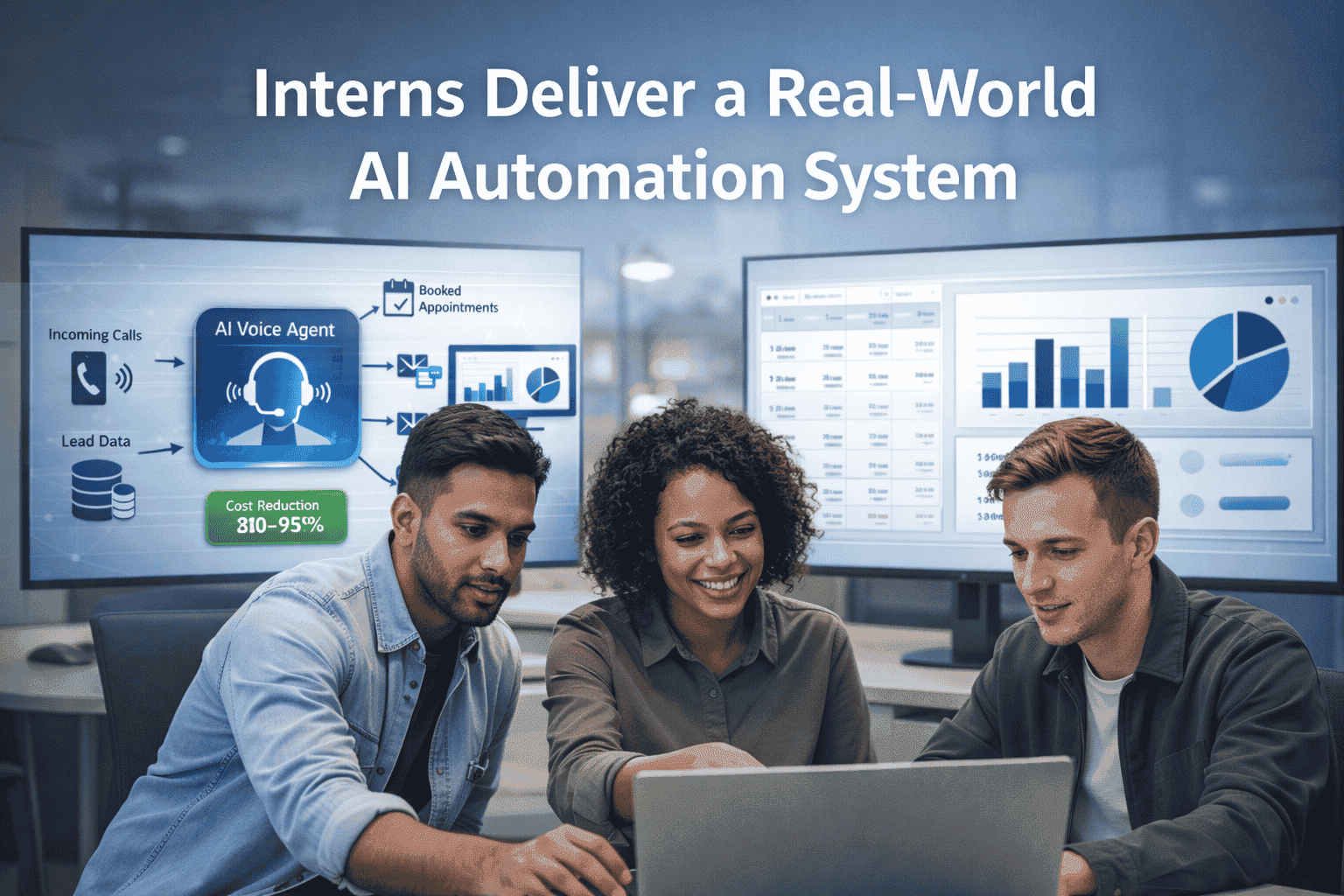
How a Team of Interns delivered a real world Ai Automation System.
Prefer watching over reading?
Watch our podcast below:
Prefer listening over reading?
listen to our podcast below:
What the CORA Voice AI Agent Internship Delivered
The CORA Voice AI Agent internship project delivered a working AI system that automated admissions calls, reduced costs by 80–95%, and produced real business dashboards—giving career switchers direct experience building and explaining a live AI solution, not just learning tools.
How This Experience Differs from Practice Projects
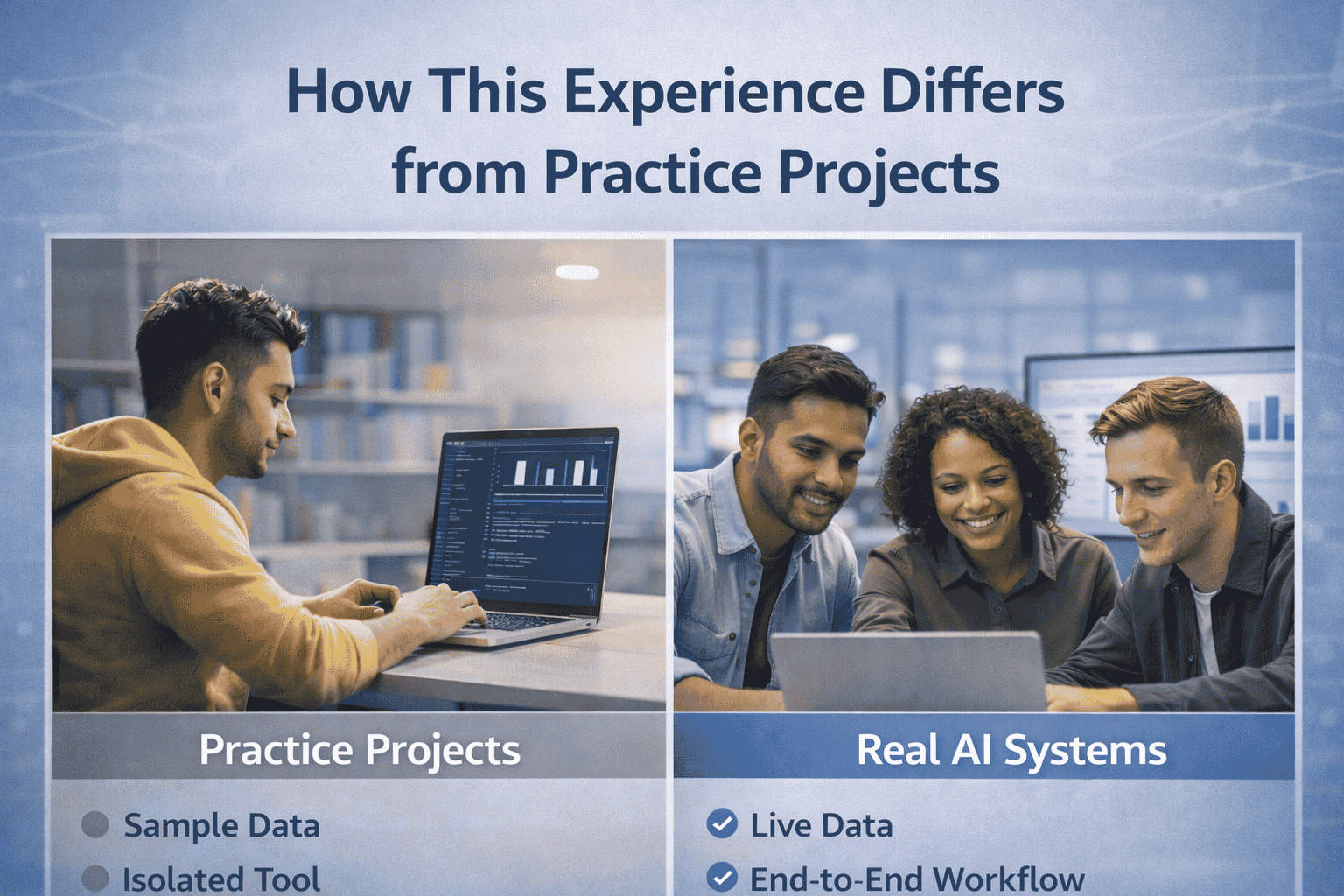
For someone switching into AI or Data, this project matters because it mirrors how AI is actually used in companies: to solve operational problems like slow follow-ups and unclear reporting. Interns worked on a system that had real users, real data, and real performance targets.
Key tools like AI voice automation and Power BI were not used in isolation. They were connected end-to-end so that AI decisions flowed into dashboards leadership could understand. This is the difference between learning software and learning how businesses use software.
Instead of toy datasets, interns dealt with call logs, AI decisions, and weekly performance tracking. That exposure helps non-tech learners understand how AI fits into real workflows without needing a computer science background.
How the CORA Voice AI Agent Was Built: A Practical Framework
Stage 1: Capturing Real AI Interaction Data
The project began by storing every AI interaction in a central database. Each phone call, transcript, and outcome was logged as structured data.
This step teaches a core industry skill: AI systems are only useful when their outputs can be stored, queried, and reviewed.
Interns learned how raw activity becomes clean, usable data for reporting and decision-making.
Stage 2: Turning AI Conversations into Decisions
The CORA Voice AI Agent handled phone conversations with leads and produced outcomes like “appointment booked” or “callback requested.”
Instead of free-text responses, the AI was forced to return structured results that automation workflows could reliably act on.
Instead of free-text responses, the AI was forced to return structured results that automation workflows could reliably act on.
This exposed interns to a real AI concept beginners often miss: AI must be predictable before it can be trusted in business systems.
Stage 3: Automating Follow-Ups Without Human Bottlenecks
Once AI decisions were captured, automation logic routed each outcome.
Booked appointments moved forward automatically. Missed calls triggered retries across channels.
Booked appointments moved forward automatically. Missed calls triggered retries across channels.
Interns saw how AI does not replace humans—it handles volume, while humans step in only when needed.
Stage 4: Translating AI Activity into Business Dashboards
All activity flowed into a live Power BI dashboard. Metrics like pickup rate, completed calls, and weekly trends were visible in real time.
This stage connected technical work to business value. Interns learned how executives judge AI systems—not by code quality, but by outcomes.
Learner Story: From Learning Power BI to Using It on the Job

One learner story closely reflects this project’s theme of practical skill transfer. Craig B. entered Colaberry with no prior tech job and chose Power BI as his core tool. Within months, he was building reports from scratch at work, using real requests and real feedback cycles
His experience mirrors this internship: learning happens fastest when tools are used to solve real problems, not academic exercises.
Common Mistakes or Misconceptions
-png.png)
- Thinking Tools Matter More Than the Problem
A common beginner mistake is thinking the hardest part is learning the tool. In this project, interns quickly realized the harder part was deciding what problem the tool should solve. - Overengineering AI Logic Instead of Clarifying Outputs
Another misconception is over-engineering AI logic. Early attempts focused on rigid rules. Progress came when interns learned that clear prompts and clean outputs matter more than complex conditions. - Underestimating the Importance of Communication
Finally, many beginners underestimate communication. This project showed that explaining AI results to non-technical stakeholders is just as important as building the system itself.
FAQs Section
- Q1. How long does it take to understand a project like this?
Most learners grasp the workflow within weeks. Mastery comes from iteration, not speed. - Q2. Is this difficult for non-technical backgrounds?
No. The project focuses on logic, outcomes, and reporting—not advanced coding. - Q3. What tools did interns actually use?
AI voice automation, workflow orchestration, and Power BI dashboards. - Q4. Do I need prior AI or programming experience?
No. Interns learned by applying structured steps with mentorship. - Q5. What roles does this prepare me for?
Data Analyst, AI Operations Analyst, Automation Analyst, or BI Developer roles. - Q6. How is this different from a typical course project?
This project had real data, real users, and measurable business impact.
How This Project Reflects the Colaberry Learning Model
-png.png)
This project reflects the Colaberry method: learning by building systems that matter. Instead of isolated lessons, learners work through full workflows with guidance from mentors who have done this work professionally.
Structured internships like this help career switchers build confidence because they can explain not just what they learned—but what they delivered. That shift is often what makes interviews and job transitions successful.
Your Next Step If You’re Considering a Career Switch