
February 19, 2026 · Colaberry School
How Interns Built a Production-Ready AI Grading System
Interns at Colaberry School built an AI grading system using Python, OpenAI, and Mandrill, demonstrating the real-world application of AI for career switchers.
How interns transformed a slow, manual grading process into a reliable, production ready AI workflow using structured automation and smart system design.
Prefer watching over reading?
Watch our podcast below:
Prefer listening over reading?
listen to our podcast below:
1. Automating Manual Grading into a Real AI Workflow
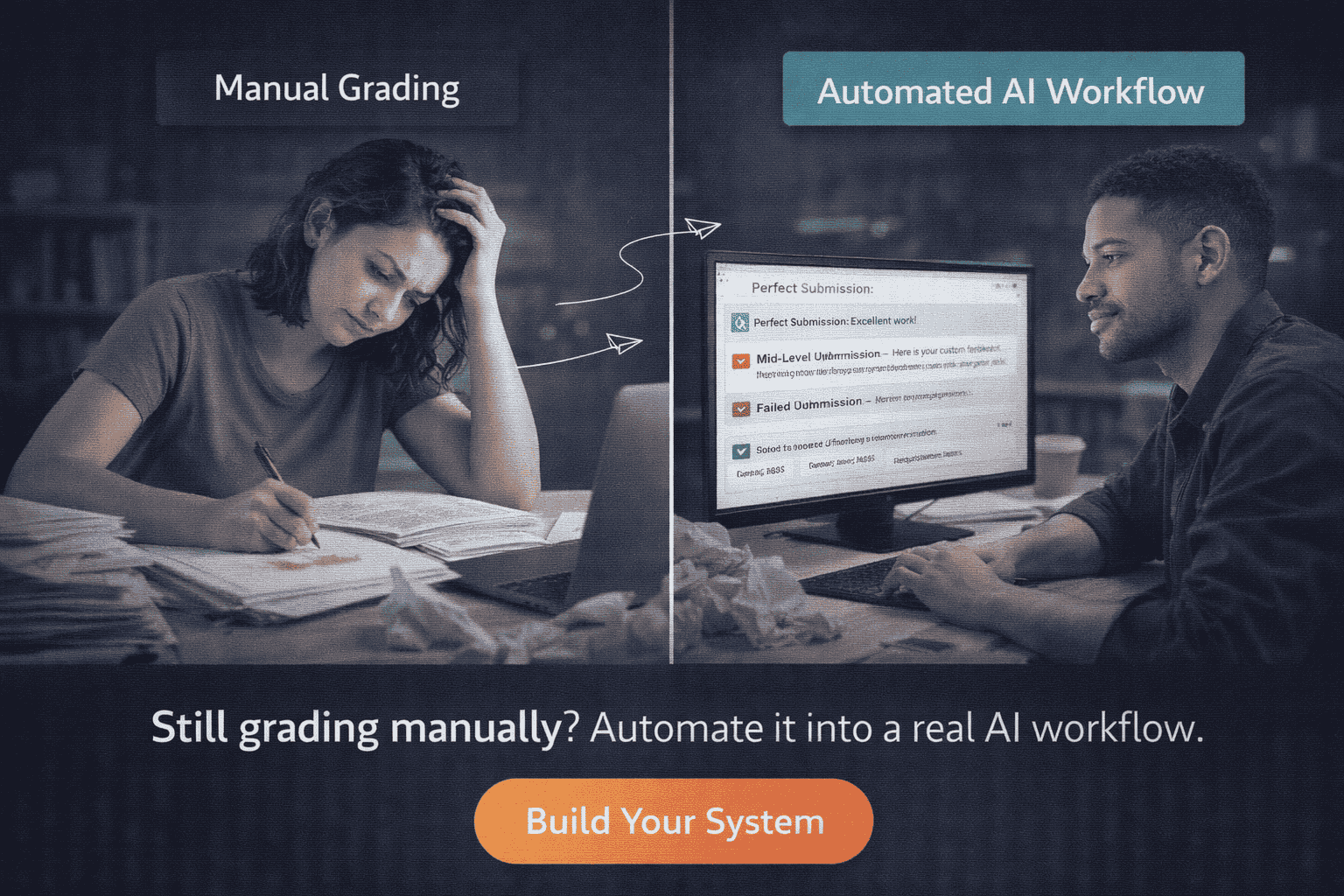
The AutoGrade AI Agent internship project automated the grading and feedback process using Python, OpenAI, and Mandrill, turning a slow manual task into a reliable AI workflow. For a career switcher, it proves you can design and run a real AI system that businesses already need—not just learn tools in isolation.
2. Why This Project Matters for Career Switchers Entering AI
Many people trying to enter AI or Data roles struggle because they only learn tools, not how those tools solve real problems. This project matters because it shows how Python code, AI models, and automation services work together to replace repetitive human work.
Python is the control layer—it decides what happens and when. OpenAI is used only where human-style judgment is needed, such as written feedback. Mandrill handles automated email delivery so results reach users without manual effort.
For someone without a tech background, this project demonstrates something important: you don’t need to invent AI models. You need to design systems that use AI responsibly, clearly, and reliably.
3. Step-by-Step Explanation / Framework
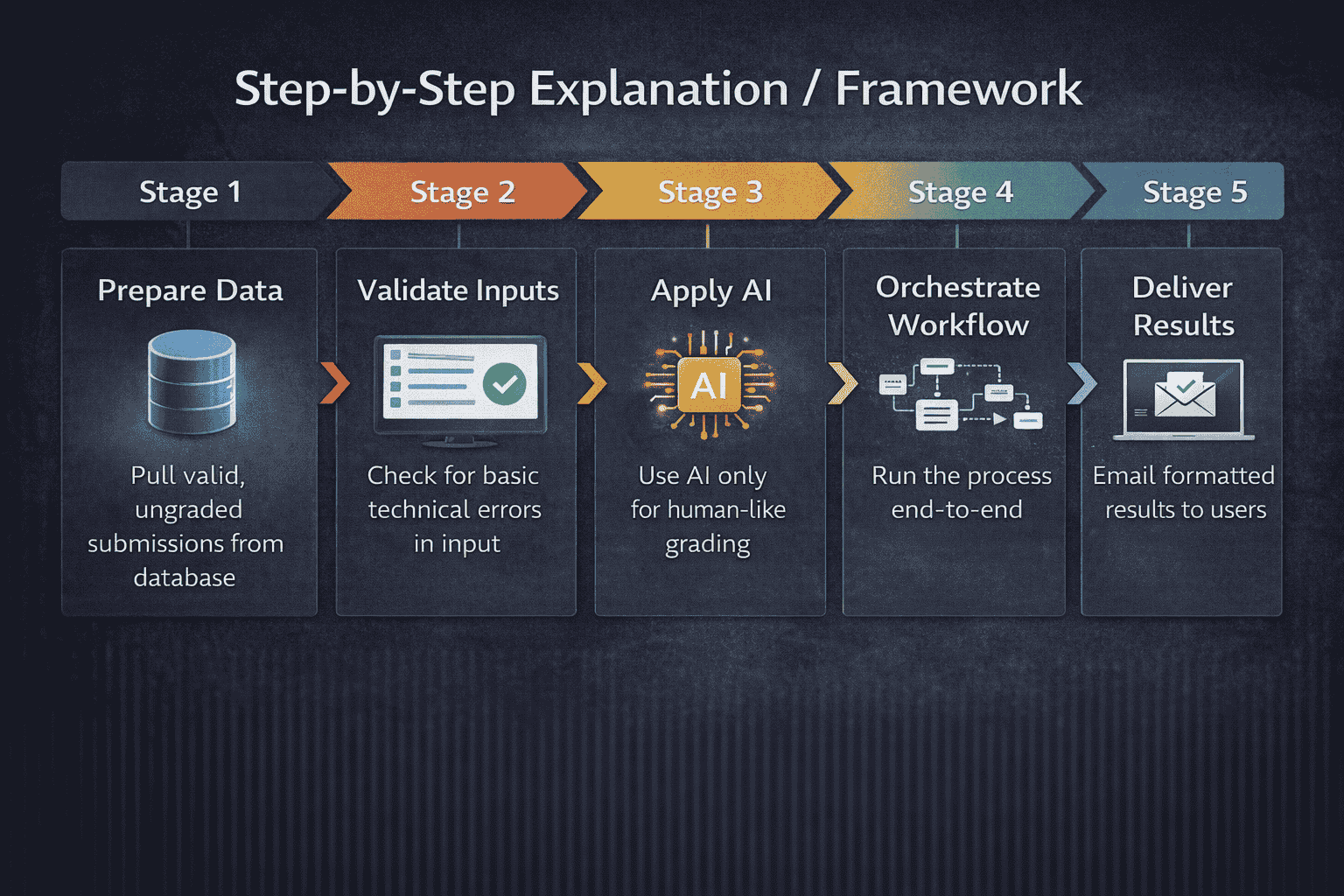
Stage 1: Preparing the Right Data Before Using AI
The system starts by pulling only valid, ungraded submissions from a database. This prevents AI from working on incomplete or incorrect data.
Why it matters: Real jobs begin with deciding what not to process.
Why it matters: Real jobs begin with deciding what not to process.
Stage 2: Validating Inputs to Prevent AI Errors
Before any AI grading happens, each submission is checked for basic technical rules, such as correct file structure. Invalid submissions are rejected automatically.
Why it matters: Businesses value stability more than “smart” outputs.
Why it matters: Businesses value stability more than “smart” outputs.
Stage 3: Applying AI Only Where Human Judgment Is Needed
AI is used selectively. Perfect or failed submissions receive standard responses, while mid-level work receives AI-generated feedback written like an experienced instructor.
Why it matters: AI supports human judgment instead of replacing it.
Why it matters: AI supports human judgment instead of replacing it.
Stage 4: Orchestrating the Workflow from Start to Finish
Each step runs in sequence so nothing is skipped. If one stage fails, the system stops safely.
Why it matters: This mirrors how enterprise automation works.
Why it matters: This mirrors how enterprise automation works.
Stage 5: Automatically Delivering Results to Stakeholders
Final results are formatted and sent automatically via email using Mandrill, with logs saved for review.
Why it matters: Completing the loop builds trust and accountability.
Why it matters: Completing the loop builds trust and accountability.
From Structured Projects to Real-World Confidence
One Colaberry learner shared how working on structured, real-world projects helped them transition confidently into a technical role, even without prior experience. They emphasized learning how systems work end-to-end—not just watching tutorials.
20 year old Alum Craig B. Shares His Colaberry Boot Camp Experience
4. Common Mistakes or Misconceptions
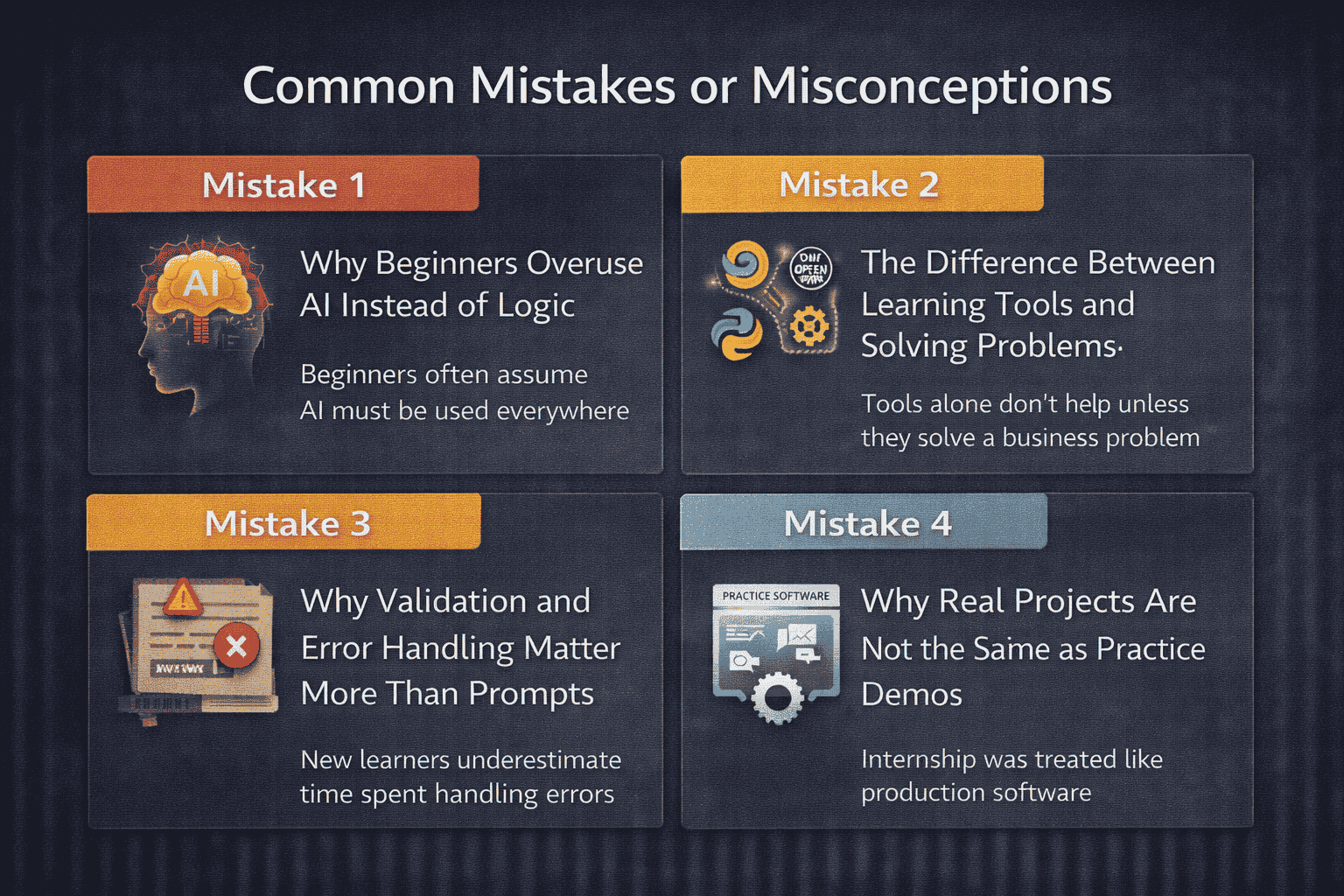
Mistake 1: Why Beginners Overuse AI Instead of Logic
Beginners often assume AI must be used everywhere. In reality, most logic should be simple and predictable.
Beginners often assume AI must be used everywhere. In reality, most logic should be simple and predictable.
Mistake 2: The Difference Between Learning Tools and Solving Problems
Learning Python, OpenAI, or automation platforms alone doesn’t help unless they solve a real business problem.
Learning Python, OpenAI, or automation platforms alone doesn’t help unless they solve a real business problem.
Mistake 3: Why Validation and Error Handling Matter More Than Prompts
New learners underestimate how much time professionals spend handling edge cases and errors.
New learners underestimate how much time professionals spend handling edge cases and errors.
Mistake 4: Why Real Projects Are Not the Same as Practice Demos
This internship treated the project like production software, which is why it translates to real jobs.
5. FAQs Section (Very Important)
Q1: How long does it take to learn something like this?
Most learners build foundational understanding in a few months with guided projects and mentorship.
Most learners build foundational understanding in a few months with guided projects and mentorship.
Q2: Is this difficult for someone with no tech background?
No. The hardest part is learning structured thinking, not advanced coding.
Q3: Do I need to be good at math or algorithms?
No. This project focuses on logic, workflow design, and problem solving.
Q4: What tools did this project use?
Python for logic, OpenAI for feedback generation, and Mandrill for automated email delivery.
Python for logic, OpenAI for feedback generation, and Mandrill for automated email delivery.
Q5: What kinds of jobs does this prepare me for?
Roles like AI analyst, automation specialist, data analyst, or junior AI engineer.
6. How Colaberry Turns Learning into Real-World AI Experience
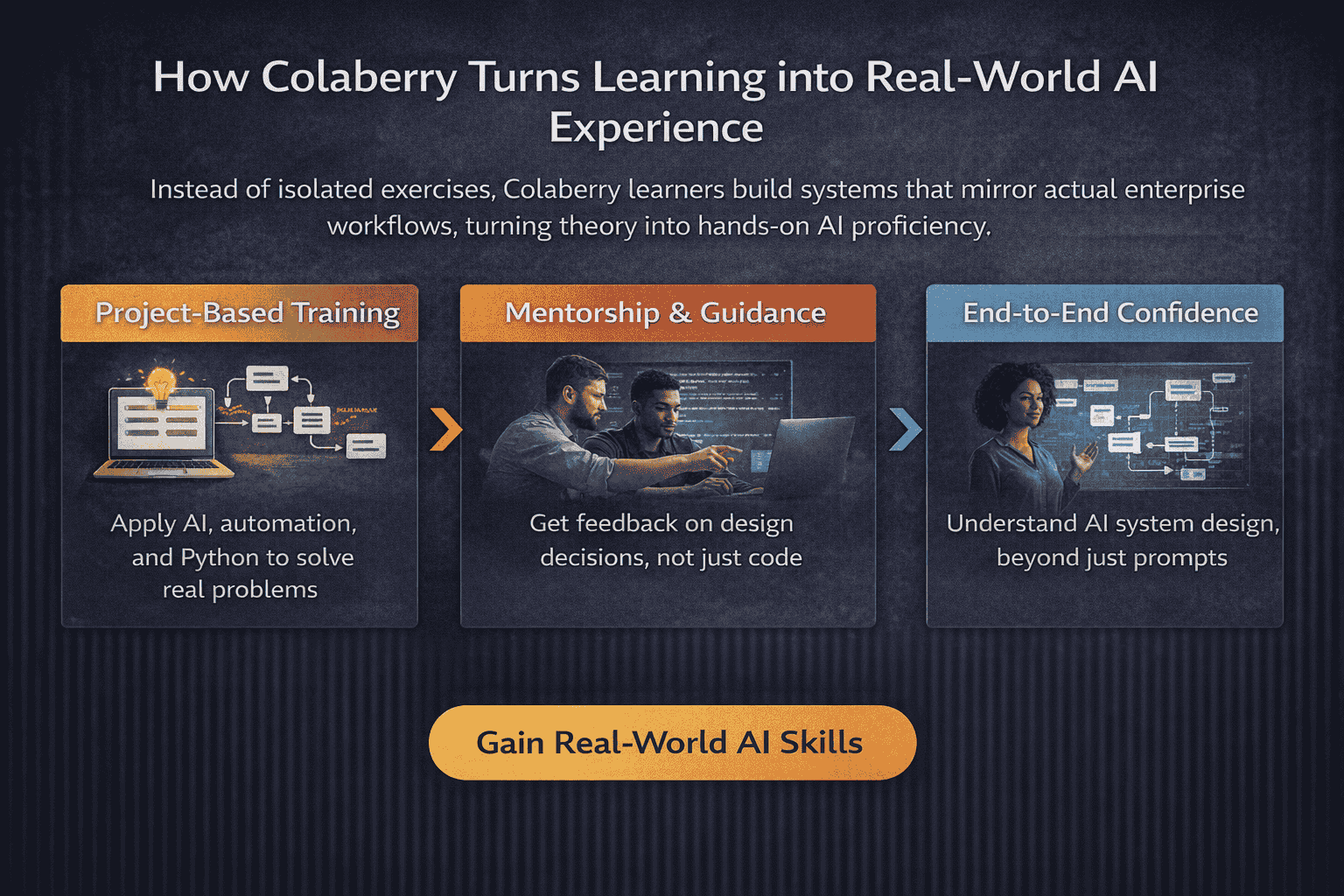
This project reflects the Colaberry approach: learning by building systems that mirror real work. Instead of isolated exercises, learners apply concepts to full workflows with clear outcomes.
Mentorship plays a key role. Learners receive guidance on design decisions, not just syntax. This reduces guesswork and builds confidence—especially for career switchers who may doubt their technical ability.
By the end, learners don’t just say they “know AI.” They can explain how an AI system works, why it was designed that way, and how it delivers value.
7. Your Next Step Toward an AI or Data Career
If you’re considering a move into AI or Data but aren’t sure where to start, the next step is simple: explore the learning roadmap and see how structured, project-based training can bridge the gap between where you are and where you want to be.